

Knowing how to handle a vehicle lockout starts with recognizing it’s almost always more frustrating than dangerous, though the wrong response can turn a simple inconvenience into real vehicle damage or a genuine safety problem. Most drivers, standing outside a locked car looking at their keys on the seat, aren’t sure whether to try another door, dig out a spare, or just start looking for something to pry the door open with.
That last instinct is the one worth slowing down for. An improvised entry attempt can damage a door seal, scratch paint, or disable wiring that’s far more expensive to fix than the lockout itself, and certain situations, a child or pet inside, a vehicle running, a spot too close to traffic, call for a different response entirely than a routine lockout does.
This guide covers what to do first, which DIY options are genuinely safe, when a lockout crosses into emergency territory, how to know it’s time to call a professional car lockout assistance, and what happens when a lockout turns out to be part of a bigger problem.
What Should You Do First If You Are Locked Out of Your Car?
Before touching anything, take a moment to assess the situation rather than reacting on instinct. Where the vehicle is parked, whether anyone or anything is inside, and what other options you have all change what the right next step looks like. Rushing straight to the most drastic option, without ruling out the simple ones first, is how a routine lockout turns into a bigger problem than it needed to be.
- Stay calm and check your surroundings. Note whether you’re in a parking lot, on a quiet street, or somewhere with real traffic exposure, since that changes how much urgency the situation has.
- Check every door, the trunk, and the hatch. It sounds obvious, but a rear door or the trunk is sometimes unlocked even when the driver’s door isn’t, and it’s worth ruling out before assuming full entry is needed.
- Check whether you have a spare key, or someone who does. A spare in your home, with a family member, or with whoever else has access to the vehicle can solve the problem without any tools or calls at all.

Why Should You Avoid Risky DIY Car Unlock Methods?
Coat hangers, screwdrivers, and other improvised tools have a long-standing reputation as lockout fixes, but that reputation comes from a much simpler era of car door design than what’s on the road now. Older vehicles used exposed mechanical linkage rods that a hooked wire could catch and pull, which is exactly why the coat hanger trick worked as often as it did decades ago.
Modern doors route wiring for power windows, power locks, and door-mounted sensors through roughly the same space those older linkage rods used to occupy. A tool worked in blind, without being able to see what it’s actually touching, can tear weatherstripping, scratch paint, snap a window motor cable, or disable wiring connected to door-mounted electronics, damage that’s often more expensive to repair than a professional lockout call would have cost in the first place. None of this means every DIY attempt causes damage. It means the odds get worse the newer and more electronically complex the vehicle is, and a failed attempt can leave you in a worse position than the lockout alone: still locked out, plus a new repair bill. If a door isn’t opening with a legitimate method within a reasonable effort, that’s the point to stop and call for help rather than escalate to something more forceful.
What If Your Key Fob Is Not Working?
A non-responsive key fob is a different problem than a straightforward lockout, and it’s worth ruling out the simple explanations before assuming the worst.
Check the Key Fob Battery First
Fobs run on small batteries that weaken gradually rather than failing all at once, so a fob that’s been acting sluggish for a while finally giving out isn’t unusual. Many vehicles have a backup entry method built specifically for this, often a physical key hidden inside the fob itself or a manual override near the door handle, covered in the owner’s manual for your specific vehicle.
Look for a Spare or Emergency Key
A spare fob, or a mechanical emergency key if your vehicle has one, can get you back in without needing to diagnose anything. If you’re not sure whether your vehicle has one of these built-in options, or how to use it, the owner’s manual or the manufacturer’s own app, where available, is a more reliable answer than guessing.
When Is a Car Lockout an Emergency?
Most lockouts are inconveniences, not emergencies, but a few situations genuinely change the priority from “get back in” to “act immediately.”
What If a Child or Pet Is Locked Inside?
This is the one scenario where speed matters more than caution about damage. Vehicle interior temperatures rise fast even on days that don’t feel especially hot: a study funded by General Motors of Canada found that on a 35°C day, a car’s interior exceeded 50°C within 20 minutes and reached 65.5°C within 40, with cracking the windows doing little to slow the process. Transport Canada treats this specifically as pediatric vehicular heatstroke, a recognized and preventable cause of death. If a child or pet is locked inside and the situation feels urgent, particularly in warm weather, calling 911 alongside any other assistance is appropriate rather than waiting to see how a standard lockout call plays out.
A running vehicle, a lockout near moving traffic, or extreme cold each shift the calculation in their own way, without necessarily reaching the same urgency as a child or pet locked inside. A vehicle left running is usually more of a security and cost concern than an immediate danger, though it’s still worth resolving quickly. Being locked out near active traffic means getting yourself to a safer position takes priority over the vehicle itself. Severe cold shortens how long it’s reasonable to wait outside comfortably, which is part of why winter lockouts deserve their own consideration further down.
When Should You Call a Professional Car Lockout Service?
Once the simple, safe options are exhausted, calling a professional is the sensible next step rather than something to delay in favor of one more improvised attempt. None of the reasons below reflect poorly on you as a driver. Modern vehicles are genuinely harder to access without the right tools than older ones were, and recognizing that is different from admitting defeat.
- You’ve confirmed the keys are locked inside, with no other door or spare available. This is the most straightforward case for professional entry.
- Your keys are lost or otherwise unavailable. Without a spare to fall back on, professional help or a locksmith is generally the realistic path forward.
- Your key fob or the vehicle’s locking system isn’t responding. Once the basic checks, battery, backup key, manual override, don’t resolve it, the problem may be beyond a quick fix.
- You don’t have the right equipment or experience to try a legitimate entry method safely. Not every driver carries or knows how to use the non-destructive tools a professional would, and that’s a reasonable limitation, not a failure.

What Should You Tell a Lockout Service When You Call?
Giving a dispatcher accurate details up front helps them send the right help without unnecessary back and forth. A technician arriving with the wrong assumptions about your vehicle or situation just means more time spent figuring things out on scene instead of actually getting you back inside.
- Your exact location. A specific address, parking level, or nearby landmark helps far more than a general description.
- Your vehicle’s make, model, and year. Entry methods and equipment vary by vehicle, so this detail matters more here than it might seem.
- What happened, and whether anyone is in immediate danger. A straightforward lockout is handled differently than one involving a child, pet, or another urgent factor.
- Whether the vehicle is running or has another problem. This affects both how the call gets prioritized and what the technician brings with them.
What Happens During a Professional Vehicle Lockout Service?
A professional lockout call generally starts with the technician confirming your vehicle and the specifics of the situation, since the right approach depends on the make, model, and locking system involved rather than a single universal method. From there, they select an entry technique suited to that specific vehicle, typically a non-destructive tool designed to create a small gap or manipulate the interior mechanism without contact damage, rather than anything resembling a coat hanger or screwdriver.
Alberta also regulates who can legally do this kind of work. Automotive lock bypass workers, and the businesses that employ them, are required to hold a specific licence under the province’s Security Services and Investigators Act. When using a professional automotive lockout service in Alberta, choosing a properly licensed provider is worth confirming, since it reflects an actual regulatory requirement rather than just a nice-to-have credential.
The goal throughout is restoring access without creating new problems: no forced entry, no unnecessary damage to seals, paint, or electronics. Once you’re back in, if the lockout was the only issue, that’s typically where the call ends. If the vehicle also won’t start, has separate damage, or can’t be safely driven, that’s a different conversation, covered next.
When Does a Vehicle Lockout Become a Towing Situation?
A lockout by itself almost never means the vehicle needs to be towed. Regaining access solves the problem entirely in the large majority of cases. But a lockout can sometimes be the first sign of a bigger issue, and it’s worth knowing when that shift has happened rather than assuming the vehicle is fine just because the door is open again.
- The vehicle won’t start once you’re back inside. A dead battery or another mechanical issue that surfaces right after regaining access is a separate problem from the lockout itself.
- The vehicle turns out to be damaged. Whether from the lockout attempt or something unrelated, damage that affects whether it’s safe to drive changes the situation.
- You’re stranded somewhere unsafe regardless of the lockout. A vehicle that’s inaccessible or unsafe to leave where it is may need to be moved even after you’re back inside it.
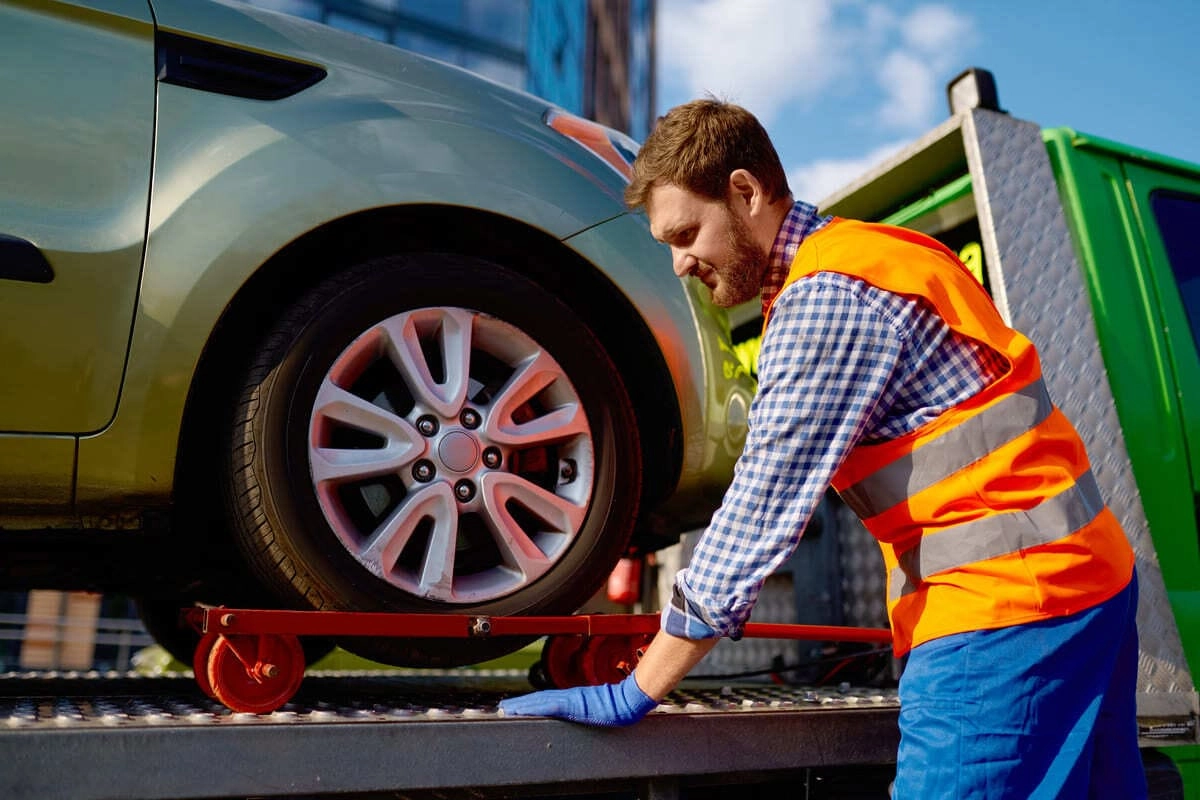
- The vehicle needs to reach a repair facility. Once the problem is mechanical rather than just access, towing is what gets both you and the vehicle to where it can be fixed.
How Can Calgary Drivers Handle Lockouts in Winter?
Cold weather doesn’t change the fundamentals of a lockout, but it does shrink how much time you comfortably have to work through the options. Standing outside in a Calgary winter while sorting out a spare key or waiting for help is a meaningfully different experience than doing the same thing in July, and it’s worth treating the wait itself as part of the problem rather than an afterthought. AMA’s own cold-weather guidance specifically warns that extreme cold makes it dangerous to be outdoors for long, even briefly, which is exactly the situation a winter lockout creates. Dressing for the actual temperature, not just the walk from the vehicle you expected to take, and getting to a nearby indoor space if one’s available while you wait, both matter more here than they would in mild weather.
Nighttime lockouts add a visibility and comfort layer on top of the cold. A well-lit area, if you have any choice in where you’re stranded, is safer and easier for a technician to find you in than a dark corner of a lot. None of this means every winter or nighttime lockout is a crisis. It means the margin for waiting comfortably is smaller, which is worth factoring into how quickly you decide to call for help rather than keep troubleshooting.
How Can You Prevent Future Vehicle Lockouts?
A handful of small habits meaningfully reduce how often this happens again, none of which require much effort or expense compared to the cost and stress of even one more lockout, especially one that happens at a bad time or place.
- Keep a spare key somewhere accessible. At home, with a trusted family member, or in a wallet rather than only inside the vehicle, a spare removes most of the stress from a future lockout before it starts.
- Check your key fob’s battery before it fails completely. A fob that’s already acting sluggish is a warning sign worth acting on rather than ignoring until it stops working entirely.
- Build the habit of checking your keys before closing the door. This sounds almost too simple to matter, but it’s the single most common way lockouts happen in the first place.
- Know your vehicle’s specific emergency entry options. Whether that’s a hidden mechanical key, a manufacturer app, or a documented manual override, knowing it exists before you need it saves real time later.
Questions and Answers
Need Emergency Car Lockout Help in Calgary?
If you’ve checked the legitimate entry options and you’re still locked out, or the situation doesn’t feel safe to handle yourself, professional car lockout assistance is a reasonable call rather than a last resort.
Full Pull Towing & Recovery includes vehicle lockouts among its roadside assistance situations and operates 24/7 across Calgary and the surrounding area. If the lockout turns out to be connected to a bigger problem, like a vehicle that won’t start once you’re back inside, 24-hour emergency towing covers getting the vehicle to where it can be repaired. For an immediate lockout situation, call (587) 315-5258.
Final Thoughts
A vehicle lockout is usually an inconvenience rather than an emergency, and treating it that way, checking legitimate entry options first and avoiding improvised forced entry, is what keeps a simple problem from becoming an expensive one. The exceptions matter just as much as the general rule: a child or pet locked inside, a lockout near real traffic, or one during severe winter weather all call for a faster, more direct response than a routine lockout does.
When the safe options run out or the situation doesn’t feel right to handle alone, professional lockout assistance is a sensible choice rather than something to avoid trying. And if the lockout turns out to be connected to a bigger mechanical problem, knowing that towing might be the next step means you’re not caught off guard by it.
Refrences
- Canada Safety Council. Hot Car Warning. canadasafetycouncil.org: https://canadasafetycouncil.org/hot-car-warning/
- Transport Canada. Dangers of Hot Vehicles and Children. tc.canada.ca: https://tc.canada.ca/en/road-transportation/dangers-hot-vehicles-children
- Alberta Motor Association. Vehicle Locksmith & Car Lockout Services in Alberta. ama.ab.ca: https://ama.ab.ca/auto/roadside-assistance/vehicle-locksmith
- Alberta Motor Association. Emergency Kit, Plugging-In Essential As Deep Freeze Approaches. ama.ab.ca: https://ama.ab.ca/news/emergency-kit-plugging-in-essential-as-deep-freeze-approaches
- Government of Alberta. Blizzards, Freezing Rain, Ice Storms and Extreme Cold. alberta.ca: https://www.alberta.ca/blizzards-freezing-rain-ice-storms-and-extreme-cold
- Government of Alberta. Automotive Lock Bypass Worker Licence. alberta.ca: https://www.alberta.ca/automotive-lock-bypass-worker-licence