

When a tow truck pulls up, most drivers don’t know whether its setup is actually right for their vehicle. A flatbed and a wheel-lift truck work in completely different ways, but which one shows up isn’t really about which truck looks more capable.
It’s whether that specific equipment suits your specific vehicle. Drivetrain, existing damage, ground clearance, and manufacturer towing requirements can all change which towing method makes sense, and getting it wrong can mean real damage to a transmission, suspension, or bodywork.
This guide breaks down flatbed vs wheel-lift towing: how each one actually works, when a flatbed tow truck or a wheel-lift tow truck tends to make sense, and what to ask before a truck arrives so you’re not just hoping the operator got it right.
What Is the Difference Between Flatbed and Wheel-Lift Towing?
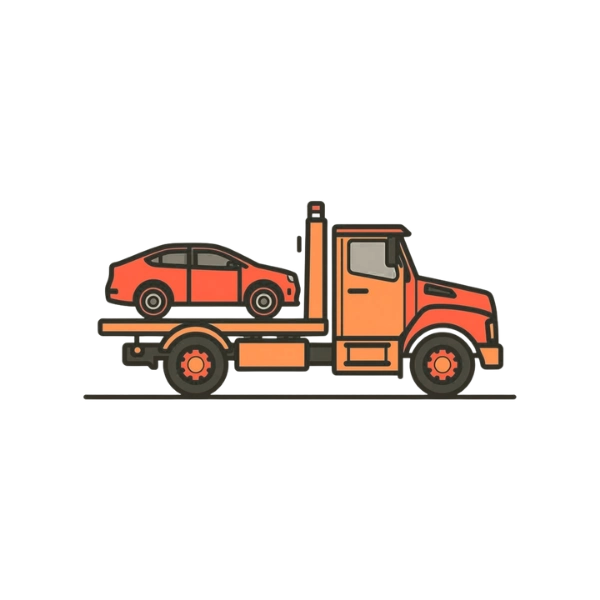
A flatbed tow carries the vehicle on a level deck with all four wheels off the road, while a wheel-lift tow raises one end of the vehicle by its wheels and leaves the other end rolling on the pavement.
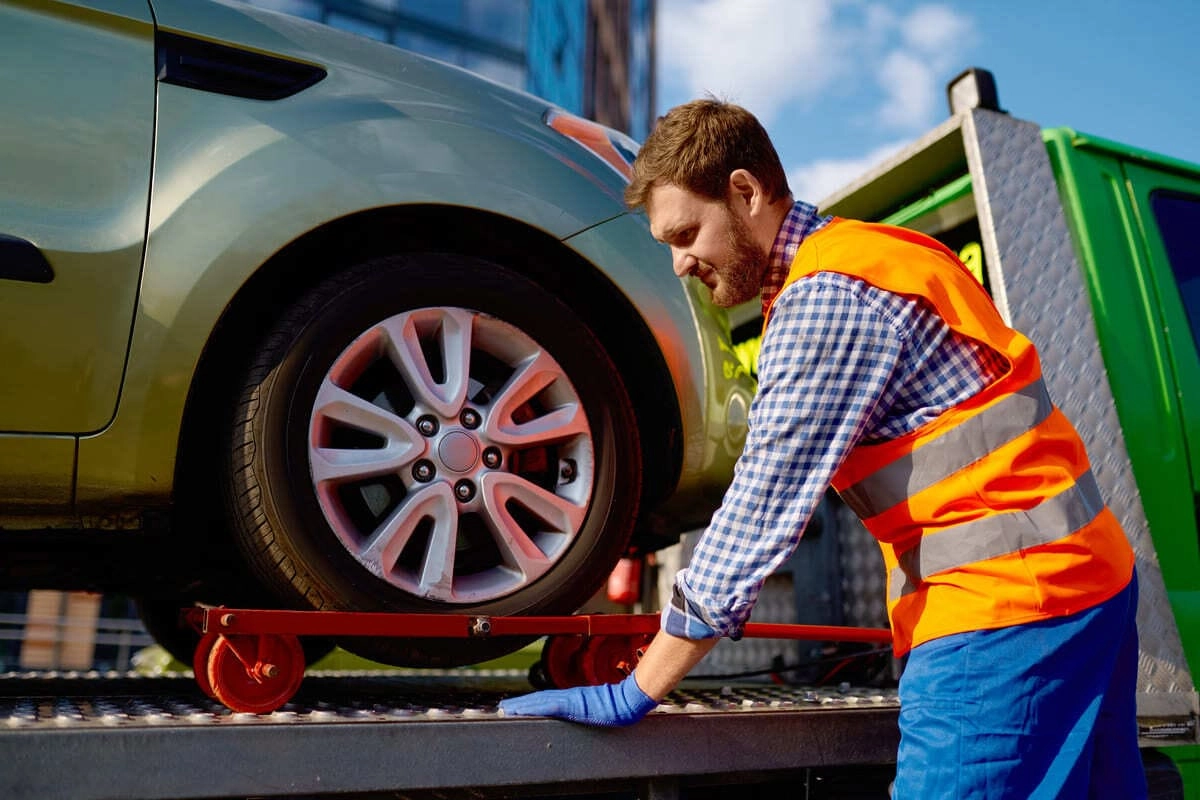
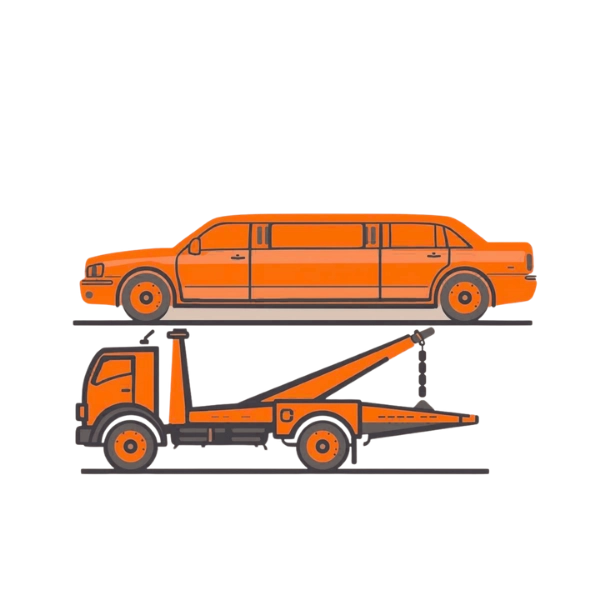
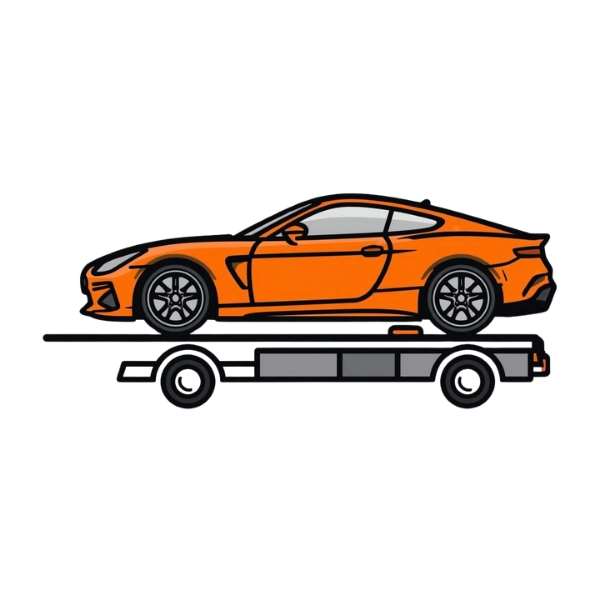
A flatbed tow truck uses a hydraulic bed that tilts down to ground level. If the vehicle can still be driven, it’s driven straight onto the deck; if it can’t, a winch pulls it on instead. Once it’s in place, straps and chains secure it to the platform, and it stays fully supported for the entire trip.
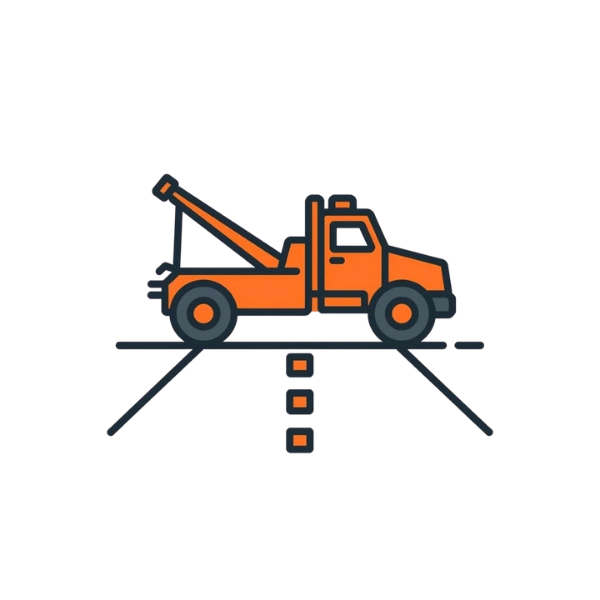
A wheel-lift tow truck works differently. A hydraulic boom and a metal yoke lift either the front or rear pair of wheels off the ground, while the other pair keeps rolling behind the truck. Which end gets lifted depends on the vehicle, which is where drivetrain considerations come in, covered in more detail below.
| Flatbed | Wheel-Lift | |
|---|---|---|
| Vehicle position | Rests fully on the deck | One end lifted, other end rolls |
| Wheels touching the road | None | Two wheels remain on the road |
| Typical use | Damaged, low-clearance, AWD/4WD, or specialty vehicles | Routine tows of suitable vehicles, tight spaces |
Neither method is universally better. The right one depends on the vehicle in front of the operator, not a fixed rule.
When Is Flatbed Towing Usually the Better Fit?
Flatbed towing tends to make sense when the vehicle needs to stay fully supported rather than partially rolling. A few situations where it’s often the more appropriate choice:
- The vehicle can’t safely roll. Suspension damage, a bent wheel, or a locked-up brake can make rolling on two wheels unsafe, regardless of drivetrain.
- All four wheels need to stay off the road. Some vehicles, and some manufacturer towing instructions, call for this specifically.
- Ground clearance is a concern. Low-riding vehicles risk scraping bodywork with a lift-based method, particularly during loading.
- The vehicle has specific towing requirements. Certain AWD and 4WD systems, along with some EVs, come with manufacturer guidance that points toward a flatbed.
- The vehicle was in a collision. A flatbed can reduce the need to roll or support a damaged vehicle through its wheels and suspension during transport.
A flatbed also tends to have practical advantages worth knowing about. Because the vehicle is driven or winched onto a level deck and then secured with straps and chains, there’s very little room for error once it’s loaded correctly, and it can accommodate a wide range of vehicle sizes, from compact cars to larger SUVs and trucks. The tradeoff is that flatbed operation is more heavily regulated than other tow truck types, and operating one safely requires proper training on the loading and securing process, which is part of why it isn’t always the truck a dispatcher sends by default.
None of this means every damaged, low, or AWD vehicle automatically needs a flatbed. It means these are the situations where a flatbed is worth considering first, and a competent operator should be assessing the vehicle rather than defaulting to whichever truck is already on hand.

When Is Wheel-Lift Towing Usually Appropriate?
Wheel-lift towing can be a perfectly appropriate choice when the vehicle can be safely supported and moved that way, and the manufacturer’s towing requirements allow it.
It tends to work well for routine tows of vehicles that can roll normally, especially over shorter distances. Because the truck itself is smaller than a flatbed, it can also be more practical in tight parking lots or narrow spaces where maneuvering a full-deck truck is harder. It can be more fuel-efficient too, which is part of why it can be the more cost-effective option for a straightforward tow. It’s not a downgrade or a budget option; for the right vehicle, it’s simply the more efficient tool.
That said, vehicle configuration still matters more than convenience. A wheel-lift setup that’s fine for one vehicle can be the wrong call for another with a different drivetrain, low clearance, or existing damage, which is exactly why the next section matters. Wheel-lift towing generally isn’t a good fit for exotic, classic, or low-riding vehicles, and locked wheels can be damaged if they aren’t accounted for before the tow begins.
Does Drivetrain Type Affect the Towing Method?
Yes, and this is one of the more technical parts of the decision. Lifting one end of a vehicle while the other end’s wheels keep rolling can put strain on a drivetrain that isn’t designed for it.
For a front-wheel-drive vehicle, a wheel-lift tow typically lifts the front end, so the front wheels stay off the ground and the rear wheels roll freely. On many front-wheel-drive vehicles, towing it the other way around, lifting the rear while the front wheels roll, can risk drivetrain damage, which is why manufacturer towing instructions should be followed rather than assumed. Rear-wheel-drive vehicles generally work the other way: the rear end gets lifted, and the front wheels roll.
AWD and 4WD vehicles are more complicated, since all four wheels are mechanically connected in ways that vary by manufacturer and system. Allowing some wheels to roll while others are lifted can create real drivetrain concerns with AWD wheel-lift towing or 4WD wheel-lift towing, though not every vehicle reacts the same way. This is exactly the situation where AWD flatbed towing is often the safer default, and it’s also exactly the situation where manufacturer towing instructions matter most. Before a truck is dispatched, it’s worth making sure the operator knows the vehicle’s drivetrain configuration and, ideally, what the manufacturer’s owner’s manual says about towing it. Automakers like Tesla and Ford publish specific towing guidance for individual models precisely because generic advice doesn’t cover every drivetrain and every situation.
What About Damaged, Low-Clearance or Specialty Vehicles?
Vehicle condition can override the usual drivetrain-based decision entirely.
If a wheel or the suspension near the lifting end is damaged, a standard wheel-lift hookup may not be appropriate regardless of drivetrain, since there’s nothing safe to attach the yoke to. Damaged vehicle towing is exactly the kind of case where the real question isn’t “which truck is better,” it’s “which equipment can safely handle this specific vehicle in its current condition.”
Low-clearance vehicles, including sports cars, modified vehicles, and some luxury models, face a related but distinct issue: loading angle. A flatbed can offer an advantage here, but it still needs to be set up and loaded correctly to avoid contact with low bodywork. The equipment being right isn’t enough on its own; the technique matters too.
Luxury and exotic vehicles bring their own considerations on top of clearance, including specialized suspension, unique drivetrain layouts, and expensive bodywork that leaves little room for error. Exotic car towing and luxury car transport are really about more than the truck itself: towing method is only one part of a bigger picture that also includes the operator’s equipment and experience with specialty vehicles specifically. If you’re dealing with a high-value or specialty vehicle, exotic and luxury car towing in Calgary covers those considerations in more depth.
Is Flatbed Towing Always Safer Than Wheel-Lift Towing?
No. A flatbed isn’t automatically the safest choice for every vehicle; the safest method depends on the vehicle, its condition, drivetrain, clearance, and manufacturer towing requirements.
A flatbed does reduce certain risks that come from having wheels still rolling on the road, particularly for damaged vehicles and demanding drivetrains. But a flatbed still involves loading, securing, and transporting a vehicle correctly, and a poorly loaded flatbed carries its own risks. A properly matched wheel-lift tow, by contrast, can be entirely safe for a suitable vehicle. Equipment selection and correct technique matter more than which truck looks more substantial.
What Should You Ask Before a Tow Truck Arrives?
A short conversation with the dispatcher or operator can confirm the setup is actually right for your vehicle before anything gets hooked up.
- Which type of tow truck is being sent? Confirm whether it’s a flatbed, a wheel-lift, or something else.
- Why is that equipment appropriate for my vehicle? A competent operator should be able to explain the reasoning, not just confirm what’s on the way.
- Does my drivetrain affect the towing method? Mention if your vehicle is AWD, 4WD, or has any towing restrictions from the manufacturer.
- Does the vehicle’s damage or clearance change the setup? Flag any existing damage, low clearance, or modifications before the truck arrives, not after.

Questions and Answers
How Full Pull Towing & Recovery Can Help With Vehicle-Specific Towing
Full Pull Towing & Recovery operates both flatbed and wheel-lift-capable towing equipment across Calgary and the surrounding area, so whether the job calls for flatbed towing Calgary drivers can count on or wheel-lift towing Calgary drivers need for a routine tow, the method gets matched to the vehicle rather than to whichever truck happens to be closest. For vehicles that call for full-deck support, flatbed towing in Calgary covers that side of the service directly. For an active roadside situation, call (587) 315-5258.
Final Thoughts
Flatbed and wheel-lift towing serve different purposes, and the right choice depends on the vehicle’s drivetrain, condition, clearance, and manufacturer requirements, not on which truck happens to look larger or more capable.
Asking a few direct questions before a truck arrives, about the equipment, the reasoning, and anything specific to your vehicle, is the simplest way to make sure the method actually matches the situation. A good towing operator should welcome those questions, not brush past them.
References
- AAA Auto Club Group. Flatbed vs. Wheel-Lift Vehicle Towing. acg.aaa.com: https://www.acg.aaa.com/connect/blogs/5c/auto/flatbed-vs-wheel-lift-vehicle-towing
- Tesla. Model S Owner’s Manual, Towing. tesla.com: https://www.tesla.com/ownersmanual/models/en_us/GUID-B2B9E17B-E1D5-4C48-9306-AC62A375038D.html
- Ford. How Do I Tow My Ford F-150 Lightning Truck? ford.com: https://www.ford.com/support/how-tos/electric-vehicles/f-150-lightning/how-do-i-tow-my-ford-f-150-lightning-truck/